Embark on a journey through the realm of Careers in Admiralty Law: Opportunities and Salaries, delving into a world where legal expertise meets maritime intricacies.
Detailing the educational requirements, job prospects, and earning potentials, this exploration promises to shed light on a dynamic and rewarding field.
Overview of Admiralty Law Careers

Admiralty law, also known as maritime law, is a specialized area of legal practice that deals with issues related to navigation, shipping, and international trade on the seas. It holds significant importance in the legal field as it governs the rights and responsibilities of parties involved in maritime activities.
Types of Legal Issues in Admiralty Law
Admiralty lawyers handle a variety of legal issues, including but not limited to:
- Cargo damage claims
- Maritime contracts and transactions
- Ship collisions and accidents
- Salvage and towage disputes
- Piracy and marine pollution cases
Examples of Cases in Admiralty Law
Admiralty lawyers often handle cases such as:
- A shipping company seeking compensation for damaged cargo
- A cruise ship facing liability for a passenger's injury at sea
- An oil spill resulting in environmental damage and legal repercussions
- An insurance dispute related to a maritime policy
Specialized Knowledge and Skills
To succeed in a career in admiralty law, individuals need specialized knowledge and skills, including:
- Understanding of maritime regulations and international conventions
- Knowledge of marine insurance and liability laws
- Strong negotiation and advocacy skills
- Ability to conduct thorough research and analysis
- Attention to detail and excellent communication skills
Education and Training Requirements
To become an admiralty lawyer, individuals must follow a specific educational path and obtain the necessary training to excel in this field.
Educational Path
Aspiring admiralty lawyers typically begin by obtaining a bachelor's degree in a related field such as maritime studies, international law, or business. Following this, they must attend law school and earn a Juris Doctor (J.D.) degree to practice law.
Recommended Courses
- Maritime Law: Provides a comprehensive understanding of the legal principles governing maritime activities.
- Admiralty Law: Focuses specifically on the laws governing maritime disputes and transactions.
- International Law: Helps in understanding the global implications of admiralty law cases.
- Contracts: Important for negotiating and drafting agreements in the maritime industry.
Importance of Internships or Clerkships
Internships or clerkships at admiralty law firms are crucial for gaining practical experience and networking opportunities within the industry. This hands-on experience can provide valuable insights and help aspiring lawyers build essential skills.
Additional Certifications or Training
- Maritime Certification: Some professionals choose to pursue additional certifications in maritime law to demonstrate their expertise in the field.
- Continuing Legal Education (CLE): Admiralty lawyers often engage in ongoing CLE courses to stay updated on changes in maritime law and legal practices.
Job Opportunities in Admiralty Law
Admiralty law offers a wide range of job opportunities for legal professionals looking to specialize in maritime and international trade law
Different Career Paths in Admiralty Law
- Admiralty Lawyer: Specializes in handling legal matters related to maritime disputes, shipping contracts, and international trade regulations.
- Marine Insurance Lawyer: Focuses on insurance claims related to maritime accidents, cargo damage, and other marine-related risks.
- Maritime Litigator: Represents clients in court cases involving maritime disputes, salvage claims, and personal injury cases on ships.
Job Roles and Responsibilities
- Researching and interpreting maritime laws and regulations.
- Negotiating and drafting contracts for ship purchases, charters, and cargo shipments.
- Representing clients in arbitration or litigation proceedings for maritime disputes.
- Providing legal advice on compliance with international trade laws and regulations.
Opportunities in Various Sectors
- Private Law Firms: Admiralty lawyers can work in specialized maritime law firms that focus on representing shipowners, insurers, and other maritime stakeholders.
- Government Agencies: Opportunities exist in government agencies such as the U.S. Coast Guard, maritime commissions, and customs departments dealing with maritime legal issues.
- Corporate Legal Departments: Many shipping companies, marine insurance firms, and logistics companies have in-house legal teams that handle admiralty law matters.
Emerging Trends in Admiralty Law Careers
- Increased focus on cybersecurity in maritime operations to prevent cyber attacks on ships and ports.
- Rising demand for admiralty lawyers with expertise in environmental regulations to address issues such as pollution and marine conservation.
- Growth of alternative dispute resolution methods like mediation and arbitration to resolve maritime conflicts efficiently.
Salaries and Compensation
In the field of admiralty law, salaries and compensation can vary depending on various factors such as experience, location, and the sector of the industry. Entry-level admiralty lawyers can expect a range of salaries based on these factors.
Salary Range for Entry-Level Admiralty Lawyers
For entry-level admiralty lawyers, salaries typically range from $60,000 to $100,000 per year. This can vary based on the size of the firm, geographical location, and individual qualifications.
Factors Influencing Salary Levels
Several factors can influence salary levels in admiralty law, including the level of experience, specialization in a particular area of admiralty law, the reputation of the law firm or organization, and the geographic location of the job.
Earning Potential in Different Sectors
The earning potential in different sectors within admiralty law can vary significantly. For example, working in a large international law firm specializing in maritime law may offer higher salaries compared to working in a smaller regional firm or in-house legal department of a shipping company.
Career Advancement and Salary Growth
Opportunities for career advancement in admiralty law can lead to potential salary growth. With experience, specialized knowledge, and a successful track record, admiralty lawyers can advance to higher positions within law firms, corporations, or government agencies, resulting in increased earning potential over time.
Closing Summary
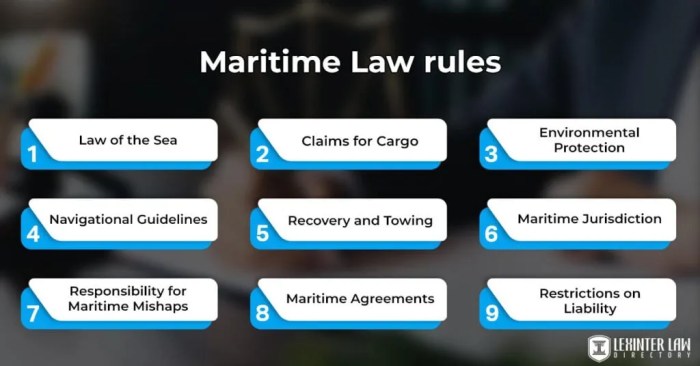
As we navigate the waters of admiralty law careers, it becomes evident that this field offers a blend of challenge and opportunity for legal professionals seeking a specialized path.
Detailed FAQs
What types of legal issues are typically handled in admiralty law?
Admiralty law often deals with issues related to maritime accidents, cargo disputes, and ship collisions.
What educational background is required to pursue a career in admiralty law?
Individuals interested in admiralty law usually pursue a Juris Doctor (JD) degree and may benefit from courses in maritime law or related fields.
What are the emerging trends in admiralty law careers?
Emerging trends include the increasing focus on environmental regulations in maritime activities and the digitalization of legal processes in the maritime industry.